
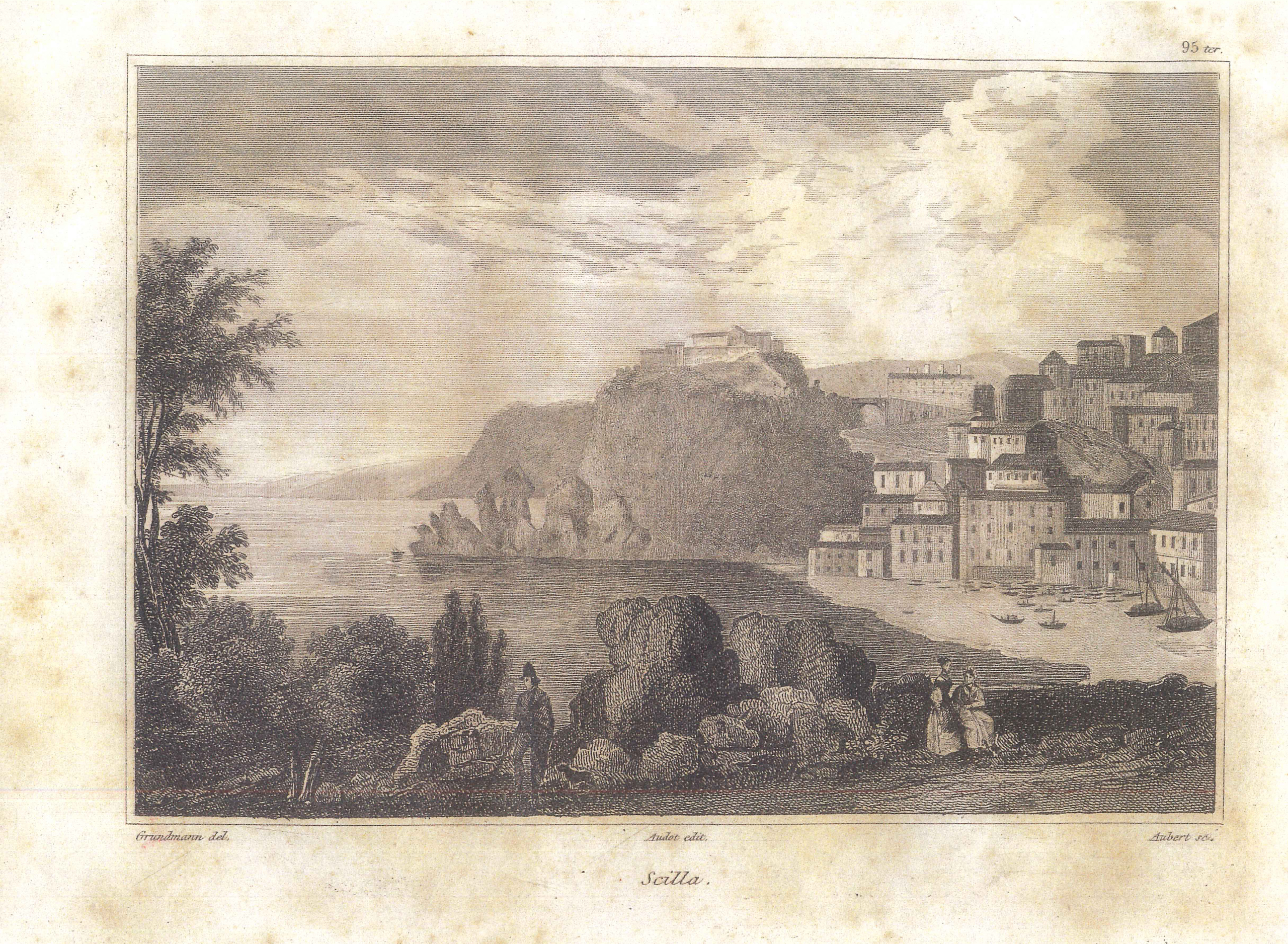
Vincenzo Cartari (Reggio Emilia, circa 1531 - 1590) was an Italian mythographer and writer. He worked for Duke Alfonso II d’Este and for Cardinals Ippolito d’Este and Luigi II, at the courts of Ferrara, Venice, Tivoli, Fontainebleau and Brussels. Cartari is best known for his work entitled: “Le imagini delli dei de gli antichi nelle quali si contengono gl’idoli, riti, ceremonie, & altre cose appartenenti alla religione de gli antichi” (“The Images of the Gods of the Ancients, Containing the Idols, Rites, Ceremonies, and Other Things Pertaining to the Religion of the Ancients”); a mythographical manual first published in Venice in 1556. Later editions were enriched with illustrations and engravings, first appearing in the 1571 edition, with woodcuts produced by artists such as Giuseppe Porta and Bolognino Zaltieri (Venetian school). These images served to provide a visual reference for artists and readers, helping to spread a standardized iconography of the deities. This book was one of the first works to provide a comprehensive guide to the gods of ancient Greco-Roman mythology, with detailed descriptions of the characteristics and stories of each deity. The work is regarded as a key text for the study of Renaissance iconography, since it served as an essential reference for many artists (painters, sculptors, etc.) who needed to represent mythological subjects in their works. His descriptions were not limited to physical appearance, but also included the rites and symbols associated with each deity, offering a complete guide for the artists of the time. In the passage dedicated to Neptune and the marine deities, Vincenzo Cartari undertakes a true excursus through the principal authors of Greco-Roman literature in order to highlight the importance of the myth of Scylla and the place connected with it. The explanation of the sea monster is not presented in isolation, but is constructed through references to the most authoritative works of antiquity, demonstrating how Scylla occupies a central position in the cultural and literary imagination of the classical world.
“Now let us return to Neptune, because, although there are many other monsters in the sea, both real and imagined by poets, as Homer imagines Scylla, who dwelt in a dark and dreadful cave, and with terrible barking made the sea resound, and this monster had twelve feet and six necks with as many heads, and each mouth had three rows of teeth, from which it seemed that deadly poison continually dripped; and from the dreadful cavern she often stretched out her terrifying heads into the sea, watching to see whether any ship might pass that way, in order to make a miserable prey of the sailors, as she once did with the companions of Ulysses, seizing and cruelly devouring as many of them as there were ravenous mouths; and when Virgil, in the third book of the Aeneid, has Helenus show Aeneas the course he must follow in order to sail safely to Italy, he makes him say that he must beware of two cruel and dreadful monsters that beset those who pass through the Strait of Sicily; and that one is Charybdis, which miserably swallows and engulfs ships, dragging them almost into the depths, and then casts them out again, driven by furious waves that raise them almost to the heavens. The fables tell that she was once a most rapacious woman who stole the cattle of Hercules, for which she was struck by Jupiter’s thunderbolt and cast into the sea, becoming the rock that has ever since retained her former rapacious nature. The other is Scylla, who lies hidden in a dreadful cavern and often thrusts out her head to see whether a ship is passing so that she may make it her cruel prey. This monster has the appearance of a beautiful maiden down to the waist, but below are the limbs of wolves and dogs joined together with the tails of dolphins, filling the place with dreadful barking. And such became the unhappy Scylla, who had once been a most beautiful nymph, through the jealousy of Circe, who was in love with Glaucus, while he loved not her but Scylla; therefore the terrible enchantress scattered her magical potions in the waters where the beautiful nymph often went to bathe, and transformed her into the creature I have described. Unable to endure the horror of the beasts that had sprung up around her, the unfortunate Scylla threw herself into the sea and remained there as the dreadful monster of which I have spoken according to the fables, which in this manner sought with a certain elegance to express the nature of those dangerous rocks.”
Cartari first cites Homer, who in the Odyssey describes Scylla as a terrible monster living in a dark and threatening cave, situated at a specific point of the sea crossed by Ulysses. The Homeric account inseparably links the figure of Scylla to a real and dangerous place, transforming a treacherous stretch of sea into a space charged with mythological significance. In this way, myth becomes a symbolic explanation of the dangers of navigation. Cartari then refers to Virgil, who in the third book of the Aeneid takes up the myth of Scylla together with that of Charybdis. Through the words of the prophet Helenus, Virgil warns Aeneas of the two monsters that infest the Strait of Sicily, confirming the fame of that place as one of the most dangerous in the ancient world. The reference to Virgil demonstrates that the myth of Scylla was not confined to the Greek tradition, but was fully adopted and reworked by Roman culture as well. Particular importance is given to the transformation of Scylla, who according to the legends was originally a beautiful nymph. Out of jealousy, the sorceress Circe, in love with Glaucus, transformed her into a monster by pouring magical potions into the waters where the nymph bathed. From this enchantment was born the hybrid creature, human in appearance in the upper part of her body and animal in her lower limbs, surrounded by dogs and wolves emitting terrifying barks. Unable to endure the horror of her new form, Scylla took refuge in a cave at the foot of the rock, becoming forever the monster feared by sailors. Through this comparison between the great Greek and Latin poets and their most important works, Cartari highlights the continuity and centrality of the myth of Scylla over time. The figure of the monster and the place in which it dwells become fundamental elements of the Greco-Roman collective imagination, symbols of the dangers of the sea and of the uncontrollable forces of nature. The myth, taken up and transmitted by the greatest authors of ancient literature, thus assumes a cultural and social value shared by the whole classical civilization. In conclusion, in this passage Cartari clearly demonstrates how Scylla is not merely a mythological character, but a central point of reference for understanding the relationship of the ancients with the sea. Through his literary excursus between Homer and Virgil, he emphasizes the importance of the place of Scylla and of its myth, which profoundly shaped the imagination and worldview of Greco-Roman society.
Giuseppe Ribuffo
