The Scilla lighthouse is an high-altitude lighthouse activated in 1913 by the Italian Royal Navy as an eastern marker for the northern entrance to the Strait of Messina, it was built thanks in part to the strenuous pressure of the Scilla political community of the time, troubled by the long trail of shipwrecks that had plagued this difficult stretch of sea for years. which brought before the King's Civil Engineers a timely and heartfelt denunciation of the frequency and dramatic nature of such disasters. Originally, the lighthouse lantern was located atop a small, single-story building with a rectangular, symmetrical layout, flanked by a watchtower.The lighthouse was later replaced by the current cylindrical, two-story, six-meter-high turret with a circular plan, two meters in diameter, located 72 meters above sea level. At the top is the beating heart of the lighthouse: the optical system, featuring a rotating optic signaling system that uses an OR 250 lens. This fixed-focus optic, with a focal length of 125 mm, uses a rotating mechanism to create a wide beam of light. The optical unit is housed in an LD3 lantern, 2.04 meters in diameter and 1.15 meters high, which ensures efficient light distribution without distortion. The lighthouse emits a single white flash (F1W) every 5 seconds. The system is powered by a 1000 W AL main lamp, which generates a high-intensity beam with a range of 22 miles (41 km). The Scilla Lighthouse is managed by the Italian Navy, with identification code 2712 E.F., as part of the national network of lighthouses that ensure the safety of navigation along the Italian coasts, and has been fully automated since the late 20th century.Beyond the purely technical aspect, the Scilla Lighthouse is something more than a simple maritime signal.This lighthouse, perched on this legendary rock, along with the Cape Peloro Lighthouse (Charybdis) that acts as its counterpart on the Sicilian shore of the Strait of Messina, has for over a century presided over one of the most ancient, celebrated, frequented and treacherous maritime passages in the Mediterranean: a millennia-old crossroads of trade routes, movements of military fleets and mythological heroes, the silent guardian of a liquid border where geography, history and myth have been intertwined for millennia.

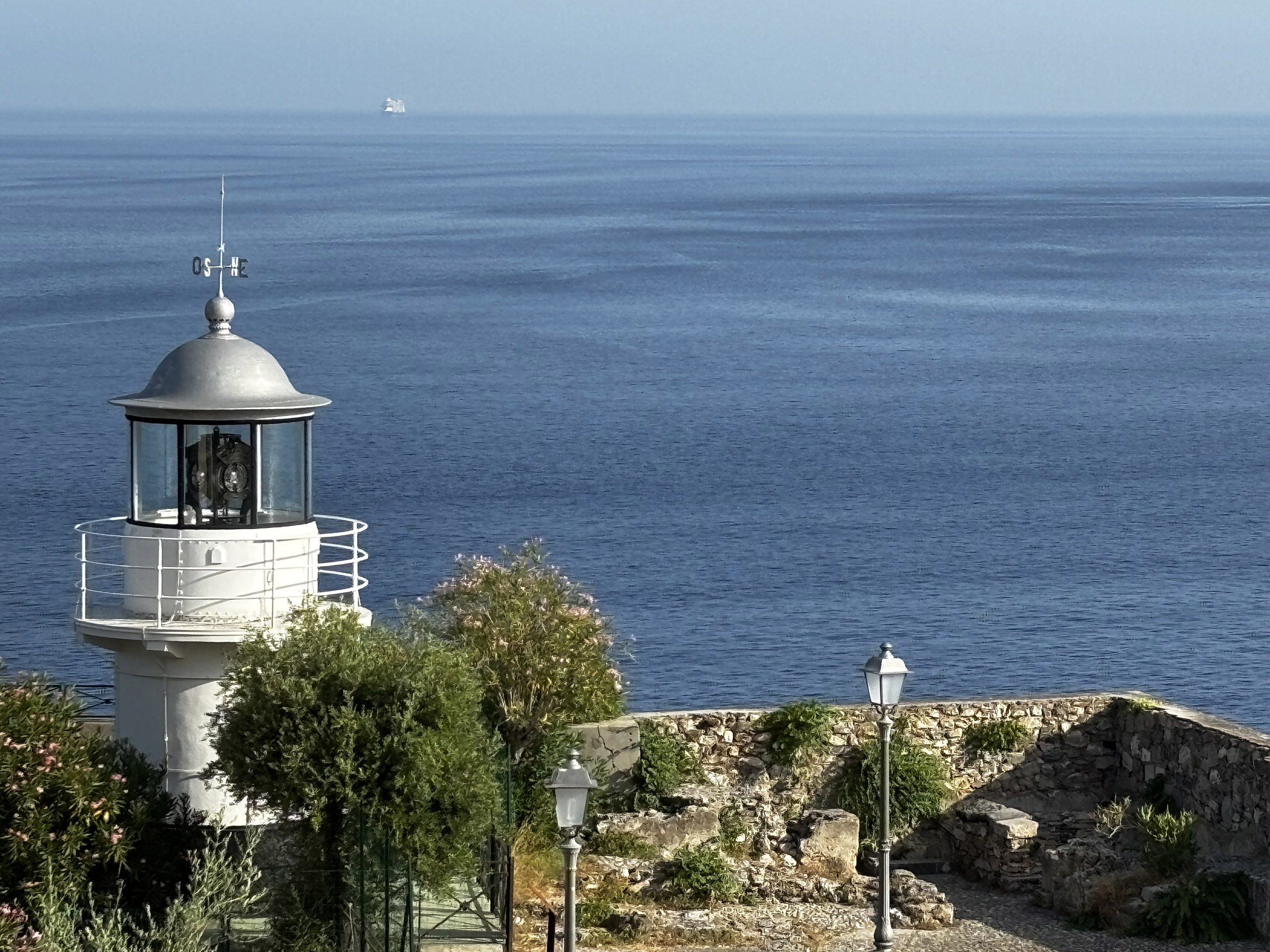
Scilla Lighthouse

Contatti
Comune di Scilla
Piazza S. Rocco, 89058 Scilla RC
Codice Fiscale: 80003330802
Partita IVA: 00709140800
PEC: protocollo.scilla@asmepec.it
Centralino Unico: 0965 754003
© 2026 UndergroundComunica.it per ApogeoSrl.com
Tutti i testi di questo sito sono di proprietà di DiscoverScilla.com e CalabriaWildWine.com e sono protetti dalle leggi sul diritto d’autore. È vietata la riproduzione anche parziale senza autorizzazione scritta.