
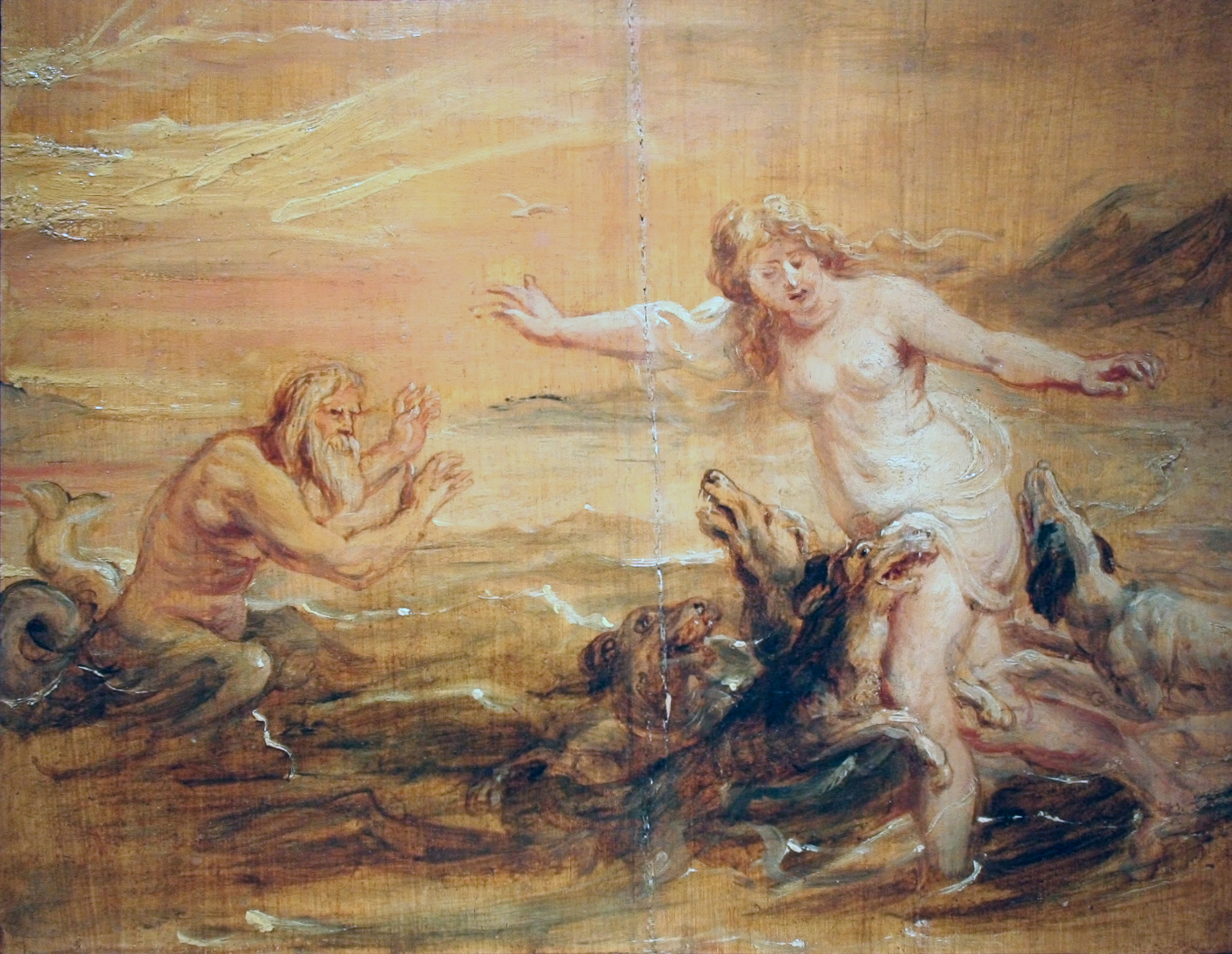
Antonio Minasi, philosopher and naturalist, was born in Scilla on 20 May 1736 to Rocco and Nicolina Dieni. He belonged to the Italian Enlightenment movement of the eighteenth century, which succeeded in moderating the harsh anti-historicism and extreme individualism of the French Enlightenment thanks to the beneficial influence of the historicism of G. B. Vico. Supported by his parents, he studied Latin, Greek and Hebrew literature, demonstrating an excellent aptitude for learning, especially in both sacred and secular sciences. Having completed his studies, he moved to Naples, where he attended the Course in Philosophical Sciences of Abbot Genovesi with remarkable success. It was precisely during this period that Antonio Minasi felt drawn to religious life and donned the Dominican habit, entering the Convent of San Domenico in Soriano in order to devote himself to sacred studies. In Naples, in 1762, he graduated in Theology and continued to study both Eastern languages and natural sciences. At Genovesi’s school, Minasi acquired the conviction that literature and science have no value in themselves, but only in relation to the good they can bring to mankind. Indeed, in every scientific study he undertook in order to uncover hidden truth — as he himself said, “sub peplo naturae” — there was never a lack of considerations inspired by sound pragmatism, which led the brilliant naturalist to make incessant discoveries. He, who had specialized in the study of philosophy and natural sciences, who had graduated in Theology and embraced religious life by entering the Dominican Order, did not disdain humble work and the invention of simple yet useful methods for agriculture. Among these were a method to counter the action of moths — “mothers of those worms that bring famine to olive oil” — and another to make every grain seed fertile by immersing it in a bath of rainwater in which nitre had been dissolved. Minasi also undertook interesting botanical experiments on the fibres of Linnaeus’ Agave, from which he succeeded in producing a highly valuable papyrus, suitable even for oil painting. This product was presented to all the academies of Europe and received widespread praise. He is credited with the purification of the fibres of the same Agave plant, from which he produced ropes, cloth and lace. He also devised a simple and innovative method for improving paper production, obtaining sheets that were whiter, better glued and drier. His Calabria, and especially his native town, were very dear to him, so much so that he gladly lived first in the Convent of San Domenico in Soriano and later in that of Reggio. Here he had the opportunity to admire and examine the optical phenomenon of the Fata Morgana, which he later discussed in one of his dissertations. The explanation of this purely natural, and by no means supernatural, phenomenon proved useful to his fellow friars in converting the population of Quito, in Central America, where a similar phenomenon occurred and was considered by the local people to be the work of their idol. In 1771 Minasi undertook an in-depth study of the zoology and phytology of the Taranto district, enriching Tommaso d’Aquino’s Deliciae Tarantinae, published in Naples, with learned notes. His extraordinary reflections highlighted both his poetic spirit and his profound scientific knowledge, so much so that they were later translated into Italian by Giosuè Carducci. Among Minasi’s dissertations, in addition to the one on the nature of coral, was a study on the behaviour of the hermit crab, which he examined so carefully that he corrected errors made by Pliny; this work was printed by his cousin Rocco Bova in 1775. His reputation as a philosopher-naturalist, recognized abroad as well, facilitated his first important appointment and his meeting with Gian Vincenzo Antonio Ganganelli (Pope Clement XIV), who in 1773 appointed him Professor of Practical Botany at the Sapienza University of Rome, succeeding Abbot Maratti. In the same year he was also entrusted with the task of visiting the Kingdom of Naples and Sicily, at the expense of the Apostolic Chamber, in order to collect fossils, minerals and volcanic materials destined for the newly established Pio-Clementino Museum, within the Vatican Museums. For this mission he was accompanied by the renowned Dutch draftsman Willem Fortuyn, as well as Bernardino Rulli, whose task was to depict the most beautiful views of the Kingdom. The views were engraved on copper by another native of Scilla, Bova, and accompanied by learned and comprehensive captions written by Minasi himself; they were published in the Novelle Letterarie of Florence and received deserved praise, especially those depicting the different sides of the town of Scilla and the Strait of Messina. After the disastrous earthquake of 1783, Minasi was sent to Calabria by King Ferdinand IV of Bourbon together with other scientists, naturalists and archaeologists, including his cousin Rocco Bova, in order to examine the phenomena produced by the terrible earthquake. Having returned to Naples, he presented the entire study to the Sovereign. Highly esteemed by learned men, Popes and Sovereigns — especially by Empress Catherine II of Russia — he established ties with each of them, offering the fruits of his discoveries: to the Pope an elegant papyrus bearing a Latin inscription, to Catherine II a pair of gloves woven from spider silk and two salt cellars made of obsidian stone. Generous and just, and Christianly attentive to human dignity, he became the driving force behind the long struggles his fellow citizens undertook against the excessive demands of their feudal lord. The events unleashed by the French Revolution brought profound upheavals to the Kingdom: the establishment of the Parthenopean Republic, the return of the Bourbons and the execution of numerous intellectuals; followed by the loss of the State by its legitimate sovereigns and the transfer of power first to Joseph Bonaparte and then to Joachim Murat. Minasi, with his culture and mentality, representative of one of the last champions of a world that was about to disappear, could not accept such upheavals. He appears to have gone into exile in Malta, where he spent the final years of his life in a convent of his Order. Thus the man who had skillfully and with great expertise sought in the natural world the means to improve the socio-economic conditions of his fellow countrymen as well, died far from his earthly homeland on 25 September 1806.
Giuseppe Ribuffo
