
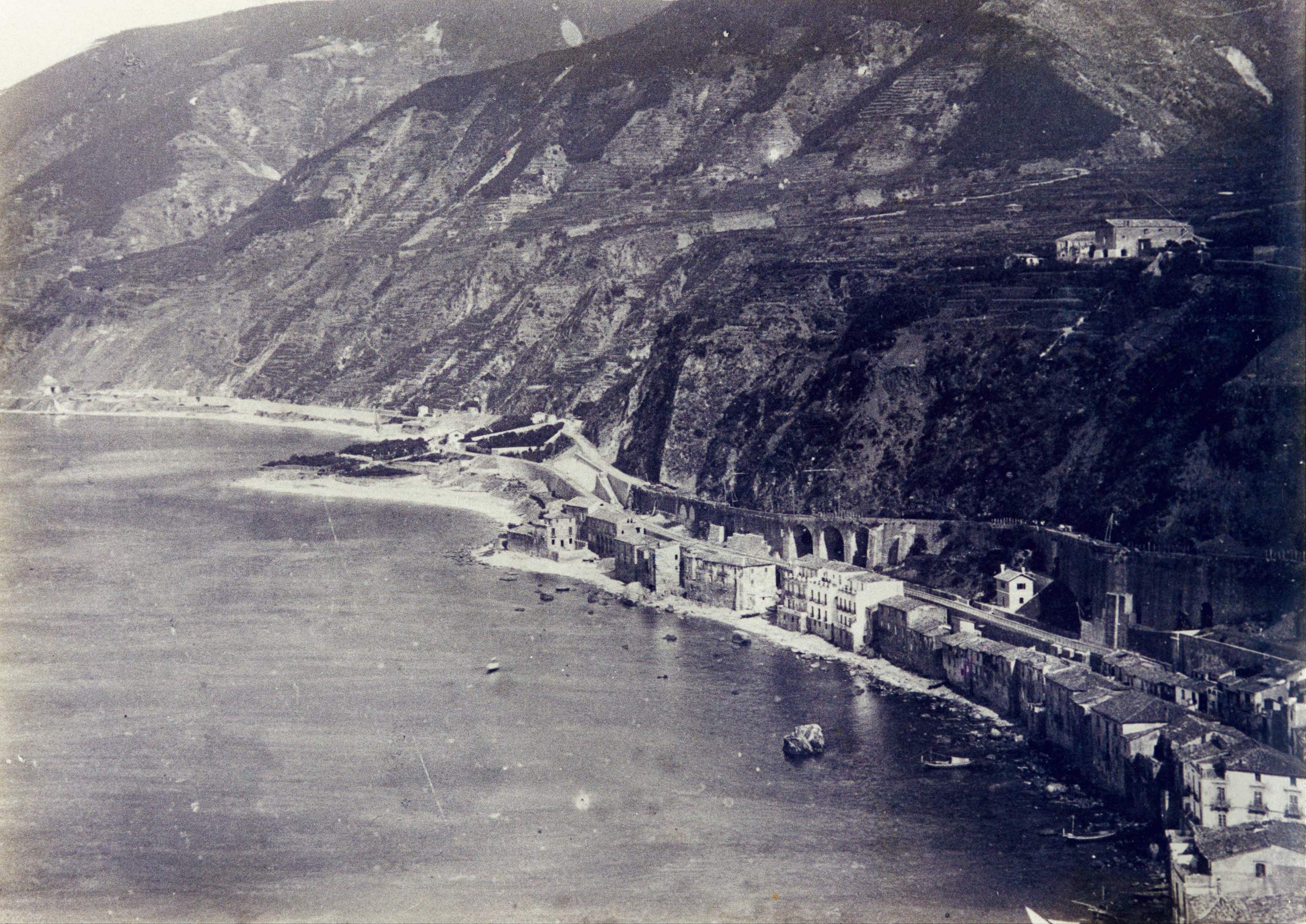
Honorius III, born Cencio but of unknown family (Rome, circa 1150 – Rome, 18 March 1227), was the 177th pope of the Catholic Church from 1216 until his death. Little is known about his life before the pontificate: in the past he was associated with the Savelli and Capocci families, but these attributions are not considered reliable. He was a canon of the Basilica of Santa Maria Maggiore in Rome; he then became papal chamberlain in 1188 and was elevated to the cardinalate by Pope Celestine III as Cardinal Deacon of Santa Lucia in Silice in 1193. Under the pontificates of Clement III and Celestine III he also held the office of Camerlengo, that is, treasurer. In 1196 the widowed empress Constance of Hauteville entrusted her son Frederick II of Swabia to the guardianship of Pope Innocent III, who assigned Cencio the task of overseeing the education of the future emperor. During this period he changed his cardinalatial title, becoming in 1200 Cardinal Priest of Saints John and Paul. On 18 July 1216 he ascended to the papal throne with the name Honorius III, succeeding Innocent III. In the heart of the thirteenth century, on 3 July 1223, in the seventh year of his pontificate, Pope Honorius III issued a papal bull addressed to the Basilian monks of the Monastery of San Pancrazio, permanently established on the rock of Scilla since 842 (9th century), by the will of the Eastern Empress Theodora. The document attests to and praises the assistance provided by the religious community to sailors and shipwrecked mariners, who were frequently victims of the treacherous currents of the Strait of Messina, and to whom they offered both material aid and spiritual comfort. As a sign of recognition, through this bull the papal authority confirmed and renewed specific fiscal privileges for the monks, thus acknowledging the value of an activity that was at once charitable, social, and strategic, intertwining piety, safety, and vigilance over a maritime passage of primary importance. This activity was also carried out at the so-called Island of Strofaria, an eremitical community connected to them, located on the rocky promontory of Pacì, which marks the western side of the Bay of Scilla and extends into the sea near the northern entrance to the Strait of Messina. Archaeological evidence of medieval religious settlements can still be found there today.
”«To the prior and the brothers of the Island of Strofaria.»
Since they, leading an eremitical life between Scylla and Charybdis, offer comfort to sailors and appropriate
assistance to shipwrecked men, placing at their disposal freely, out of a duty of piety, what they prepare with
anxious care for their own poor sustenance through the labour of their hands, it is granted that they be exempt
from payment of the twentieth intended for the support of the Holy Land and that, for the goods possessed
within the Island of Strofaria, no one may exact tithes from them.
Signie III. Non. Iulii anno septimo. - Reg. Vat. lib. 7. epist. 204.^0! 64; Mss. Vallicell. I. 33. - «Religiose pietatis
et.”
The document is a papal letter of privilege that recognizes and rewards the work carried out by the community of hermit monks of the Basilian Monastery of San Pancrazio, situated on the rock of Scilla, near the Island of Strofaria, a monastic possession located on the promontory of Pacì, in one of the most dangerous and symbolically evocative stretches of sea in the Mediterranean. The act fits fully within the medieval practice by which the Church protected poor religious communities engaged in works of mercy in strategic locations for the safety and assistance of the faithful travelling by sea. The text insists, first of all, on the monks’ way of life, describing them as men who lead an eremitical existence “between Scylla and Charybdis.” The expression has both a literary and a concrete value, for, while evoking the myth, Honorius III alludes to the historical difficulties of navigation that characterized the Strait of Messina, a place of violent currents and frequent shipwrecks. The Island of Strofaria, mentioned in the document, constituted a landed property of the monks of San Pancrazio, situated—as already noted—on the promontory of Pacì, which closes the Bay of Scilla on the western side, and represented one of the few material resources on which the community could rely. It was not, therefore, an island in the strict sense of the term, but rather a rocky strip of land projecting into the sea, easily perceived as insular from the point of view of navigation. Far from living isolated from the world, the monks carried out here a fundamental function for all who crossed that stretch of sea. The document recalls, in fact, how the monks offered comfort to sailors and assistance to shipwrecked mariners, welcoming those who found themselves in danger or distress. This help was provided free of charge, as an “office of piety,” drawing solely upon the fruits of their own manual labour, which were scarcely sufficient to guarantee their daily sustenance. The text conveys admiration for this form of silent and concrete charity, exercised in conditions of poverty and danger. It is precisely by virtue of this activity that the pope grants the monks important privileges and fiscal exemptions. They are exempted from payment of the twentieth, an ecclesiastical tax equal to one twentieth of revenues (5%), often intended to finance crusades or, as in this case, to support the Holy Land; and from the tithe on the goods possessed at the Island of Strofaria, namely the ordinary tribute of 10% on goods or income owed to the Church. Exemption from tithes represented a privilege of great importance. These were not privileges granted because of wealth or power, but rather a necessary protection to ensure the survival of a fragile community whose service possessed a clear social, spiritual, and strategic utility. Taken as a whole, the document conveys the image of a frontier monasticism: poor, exposed to the dangers of the sea, yet deeply integrated into the human reality surrounding it. The monks of San Pancrazio, on the rock of Scilla, thus appear as silent guardians of a crucial maritime passage, witnesses to a religiosity that intertwines asceticism, charity, and service to travellers. The papal letter merely officially recognizes this role, granting them legal protection so that they might continue their work in one of the harshest and most symbolic places of the medieval Mediterranean, offering testimony of great significance for the religious and civil history of Scilla.
Giuseppe Ribuffo
