
Euripides (Salamis, September 23, 480 BC - Pella, 406 BC) was an ancient Greek playwright, considered, along with Aeschylus and Sophocles, one of the greatest Greek tragic poets. According to tradition, he was born in Salamis on the same day as the famous battle. He began his public career as a tragedian starting in 455 BC. His first play, Peliades, won third prize. He quickly became popular, despite having achieved only five victories, one of them posthumous: in fact, Plutarch recounts, in the Life of Nicias, how in 413 BC, after the naval disaster of Syracuse, Athenian prisoners capable of reciting a tirade by Euripides were released. Around 408 BC, he retired to Macedonia, to the court of Archelaus, where he died. Of his vast output (ninety attributed plays), seventeen tragedies have survived.In Medea, considered one of the most significant classical tragedies, Euripides creates a solemn drama, structured into a prologue and five acts, punctuated by the chorus’s stasima. With this work, performed at the Great Dionysia in Athens in 431 BC, he stages the tragic story of a betrayed woman: Medea, a sorceress and princess, who helps the hero Jason win the Golden Fleece. However, once they reach Corinth, Jason divorces her to marry Glauce, daughter of King Creon, seeking power and legitimacy.Deeply wounded, Medea plots a cruel revenge; to deprive Jason of his offspring, she kills her own children.She flees on a solar chariot, leaving Jason in despair, but deeply scarred by his own cruelty.In the fifth act of Medea, the final confrontation between Jason and Medea takes place, after the horror of infanticide. Jason vehemently accuses her, evoking his guilt and the pain he has caused.It is in this context that Medea is compared to Scylla, a symbol of ferocity and savage nature, accentuating her otherness and inhumanity in Jason’s eyes.
JASON:
Woman, cursed above all others, you infest me and the gods, and all men, what courage did you have to draw your sword on your children, whom you bore, and left me childless and wretched? And then, after having accomplished a deed more cursed than any other, dare you look upon both Sun and Earth? Extermination! Now I have done it: then I had no sense, because I brought you from your barbarous homeland and country to my own country, to Hellas, you traitor to your father, and to the land that nurtured you, you great scourge. The gods drove the Demon against mewho was to punish you: for you had slain your brother near the hearth, when you ascended the ship of fair Argo. Such was the beginning. Then you were married to this man, and you bore children, and you slaughtered them, out of jealousy of his embrace and his bed. Oh, no one would have dared so much among the neglected Greek women I chose as my wife, you my enemy, you my ruin, a lioness and not a woman, and whose nature is wilder than the Tyrrhenian Scylla. But what good is it to bite you with a thousand and a thousand insults? Your impudence is too great. Go to hell, you worker of foulness, murderer of children! All that remains for me is to lament my fate: for I will not be able to enjoy my new marriage, I will not be able to speak to the children I bore, I nurtured, but have lost them.
MEDEA:
I would have given your words a long reply, if Zeus did not know what you received from me, what you gave me. But you, after you defamed my bed, should not have lived gaily, laughing at me, nor the queen, nor he who instigated your marriage, Creon, to banish me from this custom in shame. Call me now, as you please, lioness or Scylla, inhabitant of the Tyrrhenian plain: I tore your heart, as was right.
JASON:
You torture yourself, and share my pain.
MEDEA:
Mine, provided you do not laugh, is mitigated.
JASON:
Children, what a sad mother you had!
MEDEA:
Your father’s disease is destroying you, my children.
JASON:
No: they were not slain by my hand.
MEDEA:
Your new marriage was an outrage to me.
JASON:
Did the offended bed drive you to murder?
MEDEA:
For a woman, that’s little grief, don’t you think?
JASON:
Yes, provided she’s sane; and you’re completely sad.
MEDEA:
These are dead; and that gnaws at your heart.
JASON:
You will receive a harsh punishment from their spirits.
In the final passage of the fifth act of Euripides’ Medea, the final verbal confrontation between Jason and Medea takes place, after Medea has committed the most extreme act: the killing of her children.The dialogue is no longer aimed at changing events, but at defining their moral and symbolic meaning, primarily through the language of invective and myth.
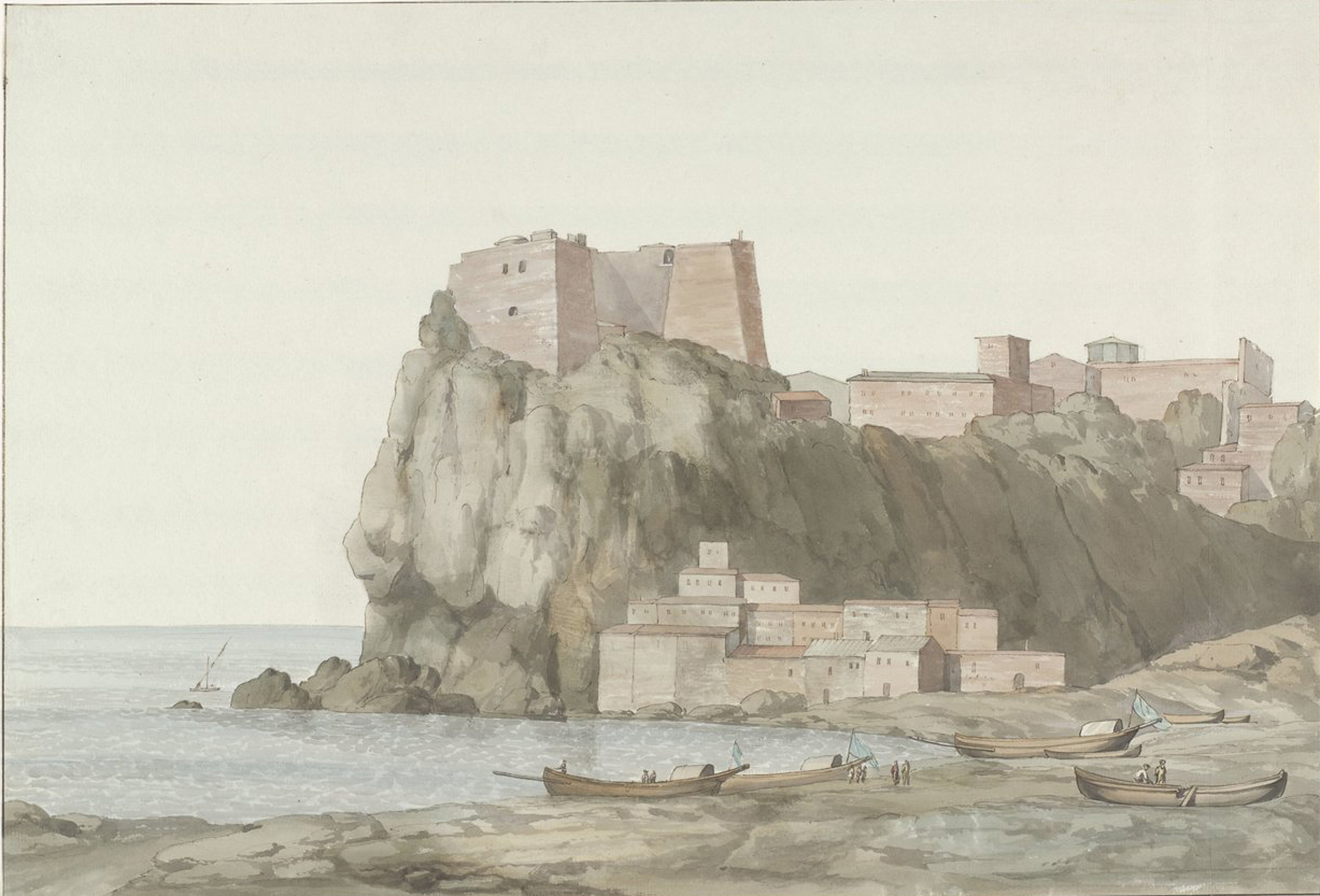
Jason opens with a long accusation aimed at dehumanizing Medea.He calls her “execrated,” “enemy of the gods,” culminating in the invective: “Your nature is / more savage than the Tyrrhenian Scylla.” The reference to Scylla is central and highly significant.Scylla, in myth, is the sea monster that devours sailors with inhuman ferocity: a liminal being, neither woman nor beast, a symbol of natural monstrosity, blind instinct, and inevitable destruction.By comparing Medea to Scylla, Jason makes a double gesture.Deprived of humanity: Medea is no longer a woman, nor a mother, but a monstrous creature driven by feral instincts.He places all the blame on her, presenting her as an absolute evil, alien to the Greek and civilized world, just as Scylla inhabits the edges of the known world, positioned like a rocky bastion at the gates of the Tyrrhenian Sea. The reference to the “Tyrrhenian Scylla” also accentuates the idea of geographical and cultural otherness: Medea, barbarian and foreign, is assimilated to a monster living at the edge of the Greek sea. Euripides thus provides the viewer with a precise spatial dimension, evidently aware of the notoriety and immediate recognizability and knowledge, both mythically and geographically, that this place located at the mouth of the Tyrrhenian Sea has among the public and Greek society at large.Medea reverses the accusation. Medea’s response is decisive and reverses the meaning of the image:
“As you please, lioness or Scylla / dweller of the Tyrrhenian plain, call me: / I will tear your heart, as was right.”
Medea consciously accepts the name Scylla, but strips it of its purely accusatory meaning. If she is a monster, it is one by justice, not by nature. Her ferocity does not arise from blind instinct, but is the consequence of Jason’s betrayal. In this way: monstrosity becomes a rational response to injustice; the horror of the act is not denied, but asserted as an instrument of punishment. Medea does not defend herself on the common moral level: she does not ask for forgiveness or mercy. Instead, she asserts an alternative code, in which the offense to the marriage bed and to the dignity of women justifies absolute vengeance. The naming of Scylla is not a simple insult, but a key symbol of the passage: it represents the attempt to explain horror by transforming it into monstrosity. Medea, however, rejects this reassuring explanation and shows that the true monster is not wild nature, but rather the injustice she has suffered and the arrogance of those who believe they can inflict it without consequences. In this way, Euripides leaves the viewer without a peaceful answer: Medea is simultaneously mother, monster, victim, and judge, just as Scylla is both woman and beast, but with a terrifying human awareness.
Giuseppe Ribuffo
