
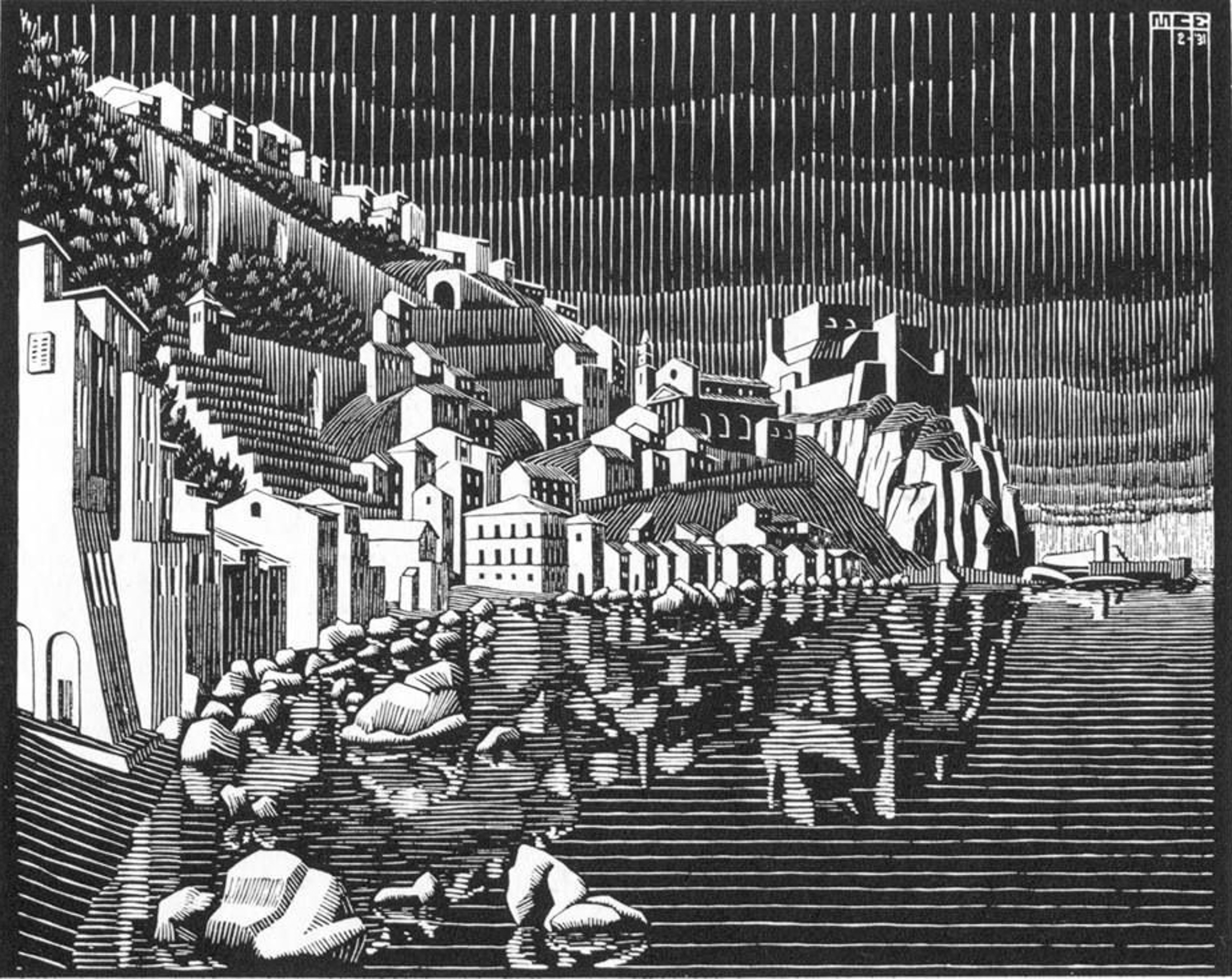
Raffaele Piria was born in Scilla on 20 August 1814, to Luigi and Angela Tortiglione.
The Piria family—although some of its members had held the office of treasurer under the Ruffo feudal lords
after the tsunami of 1783—belonged to the class of olive-oil merchants, who enjoyed a certain degree of economic
prosperity. After completing his studies in Reggio, at only fifteen years of age he was sent to Naples, where
he undertook medical studies and earned a degree from the University there.
It was in Naples that he met the naturalist Scacchi, who became one of his closest friends for the rest of his life.
However, at the center of Piria’s cultural interests stood chemistry, to which he devoted his entire life, making
it the object of an intense and constant passion.
Through this discipline he achieved great fame, to the point
that, as Cantù wrote, he was considered one of the foremost masters of organic chemistry in all Europe. This
same passion led him to Paris in 1836.
There he attempted to conduct analytical research in the room where he lodged, using “very modest means,”
as he himself wrote in a letter to his friend Scacchi.
The result of these studies was the publication of two articles in a Parisian scientific journal. However, such
research required a proper laboratory; therefore, an acquaintance of his, Jussieu, recommended him to the
celebrated Jean-Baptiste Dumas, who welcomed him and placed his scientific laboratory at his disposal.
Dumas soon came to admire Piria’s sharp intellect and meticulous precision, qualities that enabled him to tackle
even the most difficult analyses successfully, to the extent of considering him “the best of his collaborators.”
Thus, in 1841, when the envoy of the Grand Duke of Tuscany asked Dumas for his opinion regarding Piria’s
appointment as professor at the renowned University of Pisa, he unhesitatingly expressed a highly favorable judgment,
recognizing in the exceptional young man “a clear mind, keen intelligence, and great expertise.” Piria
thus began his career as a university professor, surrounding himself with a group of young scholars selected
from among the finest students from all the provinces of Italy.
He was always an example to his pupils, whom he guided with dedication, seriousness, and competence, seeing
in them the ideal continuers of his research. Among his brilliant students were Bertagnini, Piazza, Tassinari,
Pacinotti, and Missaghi.
Piria was an exemplary and gifted teacher: he possessed intuitive genius, eloquence, exceptional technical
skill—which he constantly refined—and a profound enthusiasm for chemistry.
His qualities as a great master aroused admiration and enthusiasm, as evidenced not only by the quality of his
teaching—which fascinated not only students but also distinguished figures such as Quintino Sella, Diodato
Chiaves, and De Filippi—but also by his countless scientific memoirs and remarkable works, including a treatise
on inorganic chemistry and what was described as a “scientific monument,” namely the composition of one of
the greatest treatises on organic chemistry.
Among his many outstanding achievements was the discovery, for the first time, of one of the numerous and
important plant substances now known as glucosides, obtained through the decomposition of salicin.
It was precisely within these studies, begun in 1837 during his stay in Paris at Dumas’s laboratory, that he succeeded
in transforming salicin—a glucoside extracted from willow bark—into salicylic acid, thereby identifying
its active principle; for this reason he is now considered one of the “fathers” of aspirin, since this discovery
made possible, in the following decades, the synthesis of acetylsalicylic acid.
Although this substance had been discovered by Leroux and used in pharmacy, its constituent elements were
still unknown. Through his analyses, Piria demonstrated that one of its components—sugar—was glucose.
While studying the other component, he also discovered saligenin, salicylic acid, and numerous derivatives of
the salicylic series.
The indispensable foundations provided by Piria’s research paved the way for major developments: in 1853
Charles Frédéric Gerhardt transformed salicylic acid into acetylsalicylic acid, while in 1897 Felix Hoffmann
achieved its industrial synthesis at Bayer, leading to the birth of modern aspirin.
Equally acute and profound was the insight he derived from his numerous investigations: namely, that the more
complex substances of organic chemistry result from the condensation of simpler molecules through the elimination
of water.
Turning his attention to protein molecules—an undertaking that at the time seemed entirely impossible—he
succeeded in identifying tyrosine among the products of protein decomposition.
His research on asparagine and aspartic acid, which he transformed into malic acid using nitrous acid, also
enabled him to establish a general method that made possible the conversion of amino acids into hydroxy acids.
His reputation became so great and widely acknowledged that the Minister of Public Instruction, Giovanni
Lanza, did not hesitate to appoint him, in 1856, Professor of Inorganic Chemistry at the University of Turin.
A leading figure during the years of fervent patriotism that characterized the Italian Risorgimento, he was,
together with Pilla and Matteucci, an inspirer of young students, who in 1848 formed, together with their
professors, the university battalion that covered itself with glory at Curtatone, and through its sacrifice made
possible the Piedmontese army’s victory at Goito.
Despite those brilliant victories, the outcome of the First Italian War of Independence was disastrous. Piria
therefore moved to Piedmont, where he founded, together with Matteucci, the journal *Nuovo Cimento*, and
where, a few years later, he began teaching at the University of Turin, remaining there for the rest of his life.
In 1860 we find him in Calabria, animated by ardent patriotic spirit, where he traveled to organize the plebiscite
for annexation to the new Kingdom of Italy. Thus he saw Scilla again, but soon departed, as Cavour, his
friend, entrusted him with the Ministry of Public Instruction in Naples.
The following year he was elected deputy to the new Parliament for the district of Palmi and, in May 1862, was
appointed senator. The friendship that bound him to the great statesman was strong and enduring, bringing
together two powerful personalities.
A curious episode, also linked to the name of the great chemist from Scilla, is remembered in this regard.
Cavour, absorbed in his serious thoughts, once left the cigar he was smoking immersed in the inkwell on his
desk.
When he picked it up again the next day, he noticed a particularly pleasant aroma while smoking it and asked
his scientist friend to analyze what remained of the cigar.
Piria informed him that the aroma came from particles of ferrous sulfate contained in the ink that had been
absorbed into the tobacco. The idea then arose of manufacturing cigars using that substance, and Piria supplied
the chemical formula.
The scientist from Scilla survived for several more years, continuing with complete dedication the intense work
demanded by his beloved discipline and fully deserving his place among the illustrious association of scientists
known as the “Forty.”
Soon, however, his strength failed him: he died in Turin on 18 July 1865, with his wife Eloisa at his side. Scilla
joined the cities of Turin and Naples in honoring the memory of its great son.
In 1895 the Municipal Council of Scilla placed a commemorative plaque on the house where Piria had been born.
The marble bas-relief was the work of the Messina sculptor Vincenzo Lo Schiavo, who skillfully portrayed Piria
surrounded by branches of oak and laurel. The inscription, composed by Giovanni Bovio, a friend of Piria, summarizes
the most significant aspects of his powerful personality.
The various earthquakes that have so often erased many traces of a glorious past have spared this plaque, which
remains as a memorial to one of Scilla’s greatest citizens.
May the young people of today, in an age when they themselves are threatened by dark forces that undermine
personal identity, turn their attention to this great scientist from Scilla, emulating his integrity, perseverance,
productivity, and devotion to duty and to his homeland.
Giuseppe Ribuffo
