
Alessandro Manzoni (Milan, 7 March 1785 – Milan, 22 May 1873), Italian writer, poet, and playwright, one of the greatest figures of Italian literature, wrote The Betrothed (1842), considered one of the supreme masterpieces of Italian literature. The work, also adopted as a model for the use of a national language, represents the first example of a historical novel in Italian literature.
Alongside the composition of the Sacred Hymns (1816), the tragedies The Count of Carmagnola (1819) and Adelchi (1822), and his civic odes, March 1821 (1848) stands out.
This celebrated ode, belonging to the Manzonian poetic phase inspired by civic and patriotic ideals, was written in only three days, between 15 and 17 March 1821, in the wake of the enthusiasm generated by the Carbonari uprisings in Turin in March 1821.
In that year, Victor Emmanuel I abdicated on 13 March, leaving the throne to his brother Charles Felix. Since the latter was in Modena, the provisional regency was assumed by Charles Albert, who granted a Constitution the following day.
The patriots rejoiced, and the crossing of the Ticino by the House of Savoy seemed imminent, with the prospect of liberating Lombardy-Venetia from Austrian rule.
However, Charles Albert withdrew his support from the Piedmontese uprisings, cutting short the illusion that the forces of liberation might unite to free Northern Italy from foreign domination.
In his ode, Manzoni imagines that the liberating army has already crossed the frontier and portrays the spirit of the Piedmontese, their determination to free not only Lombardy but the whole of oppressed Italy.
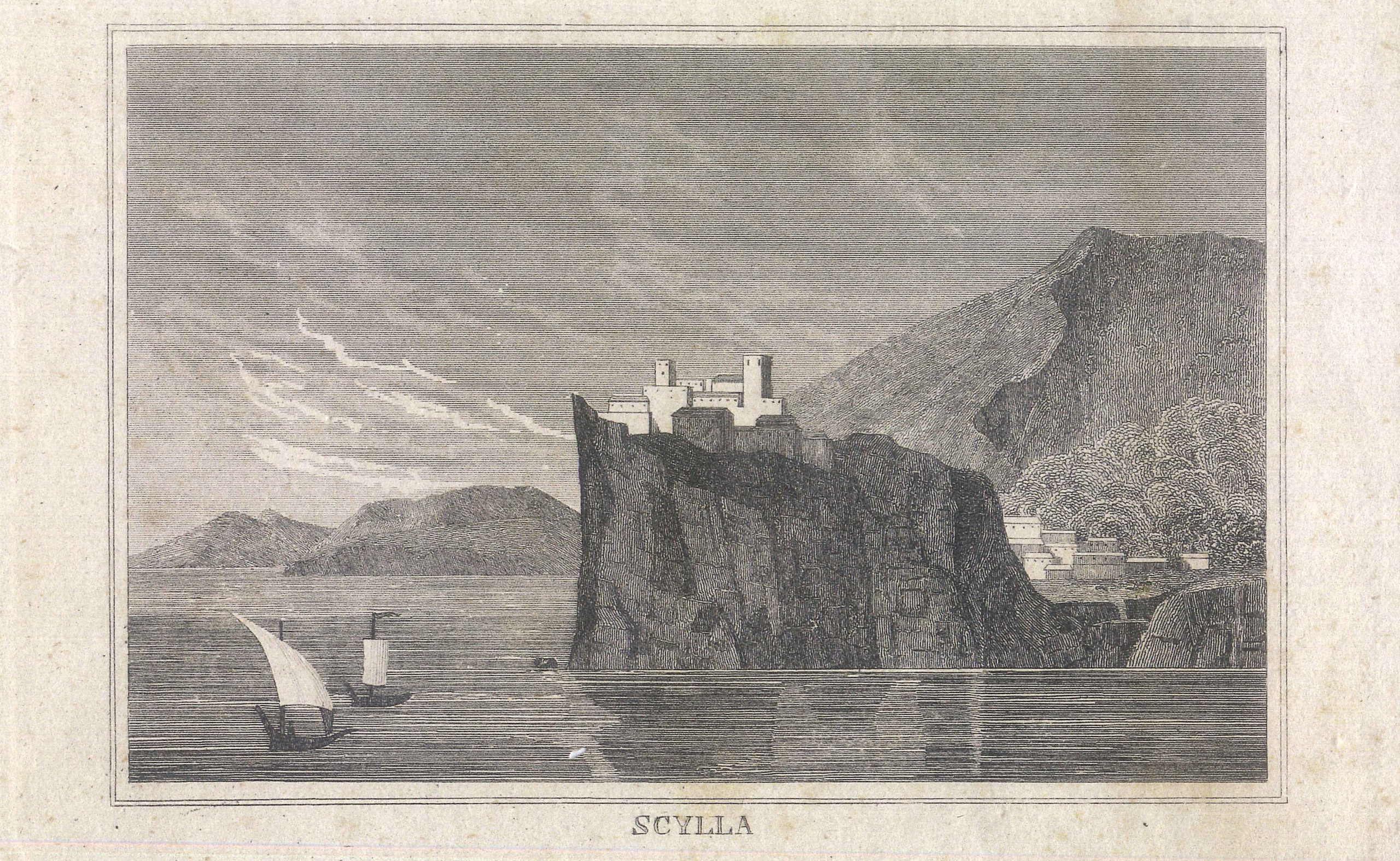
From the very first stanzas, the poet employs powerful geographical and symbolic references intended to legitimize the struggles of the Italian Risorgimento: thus, the reference to Scilla acquires an intense evocative force. Invoked by the poet, together with Mont Cenis, as the extreme boundary of the national territory, Scilla carries the profound and widely recognized symbolic value that the town and its myth have always held within the imagination of the classical world and Mediterranean civilization. The mythological and geographical reference to Scilla therefore helps emphasize the solemnity and sacredness of the territory in which the sense of belonging to a common Italian identity is rooted, despite the lack of political unity caused by the many foreign dominations to which the peninsula was subjected. Thus, the reference to Scilla is charged with powerful evocative force, being recalled by the poet, together with Mont Cenis, as the extreme limit of the national territory, because of the deep and acknowledged symbolic significance that the town and its myth have always possessed within the imagination of the classical world and Mediterranean civilization.
“O foreigners, Italy returns to her inheritance
and reclaims her own soil;
O foreigners, strike your tents
from a land that is not your mother.
Do you not see that all of it is stirring,
from Cenis to the cliffs of Scilla?
Do you not feel how treacherously it wavers
beneath the weight of barbarian feet?
O foreigners! upon your banners
rests the disgrace of a betrayed oath;
a judgment pronounced by yourselves
accompanies you in this unjust struggle;
you who cried aloud in those days:
God rejects foreign domination;
let every people be free and let perish
the unjust rule of the sword.”
In this passage from March 1821, the poet addresses directly the foreigners occupying Italy in a passionate and solemn tone.
He urges them to leave, because Italy must return to being the master of its own land, of its own “inheritance,” that is, its historical and moral legacy.
He emphasizes that Italy is not their mother, and therefore they have no right to remain.
The entire country is shaken by a desire for freedom and is reacting against oppression.
When Manzoni writes: “Do you not see that all of it is stirring, from Cenis to the cliffs of Scilla?”, he intends to convey that the uprising involves the entire peninsula, from north to south.
Cenis represents the northern Alpine frontier, while the “cliffs of Scilla” signify the extreme south of Italy.
Paraphrasing that line, one might say: do you not realize that all of Italy is in turmoil, from the Alps to the rocks of Scilla?
The mention of Scilla is important because it evokes precisely the southernmost point of the peninsula, powerfully reinforcing the idea of a people united in the same desire for liberation.
Giuseppe Ribuffo
